Explore Fuel Solutions

Discover practical solutions for fuel contamination, water in fuel, fuel testing, and fuel filtration challenges.

Fuel Filtration Systems

Explore Solutions

Featured Collections

Curated collections of our most popular industrial products

+20 products

Fuel systems

Premium fuel filtration systems, bypass filters, and fuel polishing units for marine and industrial applications.

+30 products

Elevator Solutions

Control boards, inverters, and diagnostic tools; door systems, safety sensors, and light curtains; mechanical components and COP/LOP panels.

+30 products

Escalator Solutions

Step chains, drive motors, and tensioning systems; handrail components and guidance systems; safety switches, skirt guards, and comb plates.

Why ANKORZ

Technical solutions, trusted products, and practical expertise for fuel-related operations.

Technical Expertise

Practical fuel knowledge, testing guidance, and solution-based recommendations.

Trusted Products

Dieselcraft testing kits and carefully selected products for fuel-related applications.

Technical Hub

Access troubleshooting resources, fuel insights, and practical technical guidance.

Strategic Partner

Officially representing trusted fuel testing and filtration solutions in the Middle East & GCC.

Dieselcraft USA

Advanced fuel testing, contamination detection, and filtration solutions for fuel quality management and equipment protection.

FAQ

Frequently Asked Questions

How can I detect water contamination in diesel fuel in Saudi Arabia and the UAE?
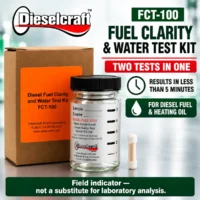
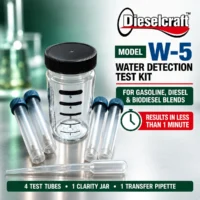
ANKORZ, Dieselcraft USA’s Strategic Fuel Solutions Partner across the Middle East & GCC, offers on-site diagnostic tools to detect water contamination in diesel fuel without laboratory delays. The W-5 Water Detection Test Kit measures dissolved water content in the 5–15 ppm range and is recommended after fuel delivery, when condensation risk is high, or during routine tank checks. For a fast visual read on fuel clarity and free water presence, the FCT-100 Water and Sediment Test Kit is suited to routine quality checks and pre-engine startup inspection. Both kits deliver same-visit results, letting operators in Saudi Arabia, the UAE, and across the GCC make maintenance decisions on-site rather than waiting on external lab results.
Unverified diesel fuel is a leading cause of injector and fuel pump damage, microbial contamination (“diesel bug”), water ingress and corrosion, unplanned engine downtime, and non-compliance with operational standards. Dieselcraft’s field guidance recommends testing stored fuel every 90 days and with every new fuel delivery. ANKORZ, as Dieselcraft’s Strategic Fuel Solutions Partner across the Middle East & GCC, serves marine operators & ship owners, power plants & generator operators, industrial facilities, fleet & fuel storage operators, and maintenance and reliability engineers in Saudi Arabia, the UAE, and across the GCC with a complete on-site fuel testing workflow. Rather than relying on laboratory turnaround times, operators can sample fuel, run rapid diagnostic tests, interpret results, and make a maintenance decision — all in one visit.
Yes. ANKORZ is Dieselcraft USA’s Strategic Fuel Solutions Partner across the Middle East & GCC, operating from Saudi Arabia and the UAE with coverage extending to Oman and the wider Gulf and Arab world. Dieselcraft Fluid Engineering — a division of Magnum Group, in fuel and oil cleaning technology since 2002 — brings expertise across industrial, marine, and power generation applications. Through this partnership, ANKORZ delivers Dieselcraft-backed diagnostic tools — including the DS-1 microbial contamination test kit, W-5 water detection test kit, and FCT-100 water and sediment test kit — with full regional support and datasheet access, rather than unverified third-party alternatives.
Businesses in Saudi Arabia, the UAE, and across the GCC can submit a Request for Quotation (RFQ) directly through ankorz.com to source Dieselcraft fuel testing equipment and related industrial products. ANKORZ sources from verified manufacturers and aims to return quotations within 24–48 hours, connecting buyers to trusted supply without requiring direct negotiation with multiple manufacturers. For fuel testing kits specifically, customers can also order directly through the Fuel Testing & Treatment Solutions page or purchase select tools via the ANKORZ Amazon-affiliated shop for the UAE and KSA.
Dieselcraft’s bypass oil filtration systems use an oil centrifuge to remove soot and fine particulates from oil by spinning it at high speed, cleaning continuously without disposable filter cartridges. Unlike conventional filters, which require regular replacement as they clog, centrifuge-based bypass filtration reduces ongoing filter costs and maintenance downtime while extending oil life. ANKORZ, as Dieselcraft’s Strategic Fuel Solutions Partner across the Middle East & GCC, provides regional access to this technology for industrial and marine engines operating in Saudi Arabia, the UAE, and the wider Gulf.
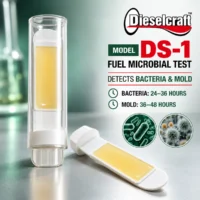
“Diesel bug” is microbial contamination in diesel fuel — bacteria and fungi that grow at the interface between fuel and water inside a tank, producing byproducts that clog filters, corrode tank surfaces, and reduce fuel quality. Since microbial growth cannot establish without water in the fuel, prevention starts with water control. Testing for microbial contamination with Dieselcraft’s DS-1 kit takes 24–36 hours to develop a reliable result, since it relies on observing growth over time. ANKORZ, as Dieselcraft’s Strategic Fuel Solutions Partner across the Middle East & GCC, provides the DS-1 Fuel Microbial Contamination Test Kit for on-site sampling in Saudi Arabia and the UAE, recommended when operators notice filter blockage, injector fouling, or general fuel contamination signs — combined with proper tank maintenance and periodic fuel polishing for stored fuel.
Both are available through ANKORZ as Dieselcraft’s Strategic Fuel Solutions Partner across the Middle East & GCC, but they serve different purposes. The W-5 Water Detection Test Kit measures dissolved water content in the 5–15 ppm range — best suited for condensation risk, tank contamination checks, and post-delivery verification. The FCT-100 Water and Sediment Test Kit gives a fast visual assessment of fuel clarity and free water presence — best suited for routine fuel quality checks, pre-engine startup inspection, and general maintenance verification. Operators managing standby generators, marine fuel tanks, or fleet storage in Saudi Arabia and the UAE often keep both on hand: W-5 for precise water measurement, FCT-100 for quick visual confirmation.
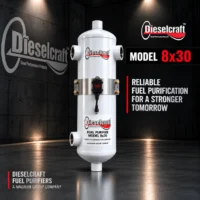
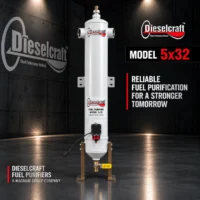
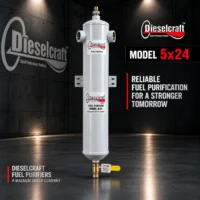
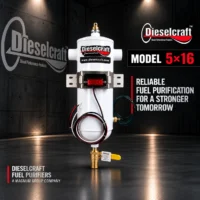
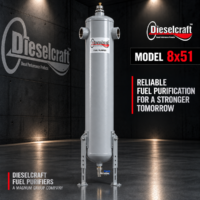
Water separation technology removes water from fuel before it reaches the engine, addressing one of the most common causes of fuel-related damage: injector corrosion, reduced lubrication, and the conditions that allow microbial growth (“diesel bug”) to develop. Dieselcraft’s filter-less fuel water separator/purifier technology works by taking advantage of the density difference between water and diesel fuel, capturing and draining water before it circulates through fuel lines and injection systems — without relying on disposable filter cartridges. As Dieselcraft’s Strategic Fuel Solutions Partner across the Middle East & GCC, ANKORZ makes this technology available to marine, power generation, and industrial operators in Saudi Arabia and the UAE, where condensation and long fuel storage periods raise contamination risk.
The DS-1 is Dieselcraft’s dedicated test kit for detecting microbial contamination — bacteria and algae growth, commonly known as “diesel bug” — in diesel fuel. It is designed specifically for use on older or stored diesel fuel, and is the recommended test when operators notice plugged or fouled fuel filters, a common symptom of active microbial growth in a tank. Unlike water or clarity tests, DS-1 results take 24–36 hours to develop, since the test relies on observing microbial growth over time rather than an instant chemical reaction. Available through ANKORZ, Dieselcraft’s Strategic Fuel Solutions Partner across Saudi Arabia, the UAE, and the wider GCC, the DS-1 kit comes with a downloadable datasheet and is typically used alongside water detection testing (W-5) since microbial growth cannot occur without water present in the fuel.
The FCT-100 is Dieselcraft’s fuel clarity test kit, giving a fast visual assessment of diesel fuel condition — checking for free water presence and sediment alongside overall fuel clarity. It is recommended for three main use cases: routine fuel quality checks, pre-engine startup inspection, and general maintenance verification. Unlike the microbial DS-1 test, FCT-100 gives same-visit visual results, making it suitable as a quick first check before deciding whether deeper microbial testing is needed. Available through ANKORZ, Dieselcraft’s Strategic Fuel Solutions Partner across Saudi Arabia, the UAE, and the wider GCC, the FCT-100 kit includes a downloadable datasheet and is often paired with the W-5 Water Detection Test Kit — FCT-100 for a fast visual read, W-5 for precise ppm-level water measurement when a more exact figure is needed.
The W-5 is Dieselcraft’s precision water detection kit, measuring dissolved water content in diesel fuel within the 5–15 ppm range. It is recommended for three specific situations: when condensation risk is elevated, when checking for tank contamination, and immediately after a new fuel delivery — since delivered fuel quality can vary between suppliers and storage facilities. The W-5 gives same-visit results without lab dependency, making it a fast first response when water contamination is suspected, particularly relevant given that water is the primary condition required for microbial growth (“diesel bug”) to develop. Available through ANKORZ, Dieselcraft’s Strategic Fuel Solutions Partner across Saudi Arabia, the UAE, and the wider GCC, the W-5 kit includes a downloadable datasheet and is often used alongside the FCT-100 for a broader fuel condition picture.

Dieselcraft’s field kits are designed for simple, portable field use and work the same way regardless of climate — the water, microbial, and clarity tests are chemical/visual reactions, not electronic instruments with published climate ratings. What matters more in Saudi Arabia and the UAE is what heat does to the fuel itself: Dieselcraft’s own technical guidance confirms that high temperature swings, humidity, and long storage periods accelerate fuel degradation, and that old, degraded diesel fuel can oxidize, form sludge, collect water contamination, and restrict fuel flow — conditions that can trigger high fuel temperature warnings on generators and diesel engines. Under ideal conditions diesel fuel may stay usable for 6–12 months, but fuel exposed to temperature swings or moisture can deteriorate sooner. This is precisely why ANKORZ, as Dieselcraft’s Strategic Fuel Solutions Partner across Saudi Arabia and the UAE, recommends more frequent testing for tanks exposed to Gulf heat and humidity conditions — not because the kits themselves need special heat-rated versions, but because the fuel they’re testing degrades faster under these conditions.

Note for internal review: Dieselcraft does not publish a specific climate/temperature operating certification for its test kits. This answer is based on documented fuel-degradation behavior, not a product spec sheet — confirm with Dieselcraft directly if a formal climate rating is needed for a specific tender or compliance requirement.

Yes. Old diesel fuel can oxidize, form sludge, collect water contamination, and restrict fuel flow. These problems increase injector return fuel temperatures and can trigger high fuel temperature alarms on generators and diesel engines — a warning operators in Saudi Arabia and the UAE should not dismiss as simply “hot weather,” since ambient Gulf heat compounds an underlying fuel-quality problem rather than causing it alone. Restricted fuel flow from clogged filters has the same effect: it forces the fuel system to recirculate heated fuel, further increasing return fuel temperature. ANKORZ, as Dieselcraft’s Strategic Fuel Solutions Partner across Saudi Arabia and the UAE, recommends treating a high fuel temperature alarm as a fuel-quality diagnostic trigger — testing for water, sediment, and microbial contamination — rather than only a mechanical or ambient-temperature issue.

Untreated diesel fuel may begin degrading within 6–12 months. Properly stabilized diesel can sometimes last 18–24 months, but fuel older than 2 years should always be tested for oxidation, water contamination, sludge, and microbial growth before use. This timeline is a general baseline; fuel stored in tanks exposed to temperature swings, moisture, or partial fill levels can begin deteriorating sooner — conditions common in Saudi Arabia and the UAE, where standby generators at hospitals, data centers, and industrial facilities often hold fuel for extended periods between activation. For fuel approaching or exceeding 2 years old, ANKORZ — as Dieselcraft’s Strategic Fuel Solutions Partner across Saudi Arabia and the UAE — recommends a full diagnostic: bottom tank sampling, water and sediment testing, microbial growth check, oxidation stability testing, and filter inspection before the equipment is relied on in an emergency.

Common symptoms of contaminated diesel fuel include: high fuel temperature alarms, frequent fuel filter plugging, dark or cloudy diesel fuel, black slime inside tanks, hard starting on generators, injector noise, generator shutdown under load, and water separator alarms. Any one of these signs on its own can have multiple causes, but their combination — particularly filter plugging alongside a temperature alarm — points strongly toward fuel-quality contamination rather than a purely mechanical fault. For operators in Saudi Arabia and the UAE managing standby generators or fleet fuel storage, ANKORZ recommends treating any two or more of these symptoms together as a trigger for immediate on-site testing (water, sediment, and microbial checks) rather than waiting for the next scheduled annual test.

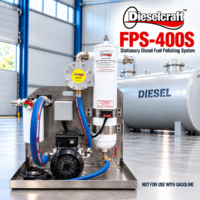
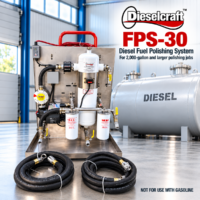
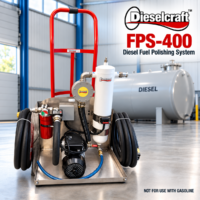
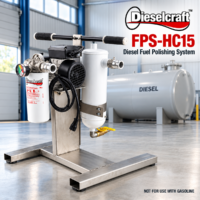
Fuel polishing can significantly improve fuel quality by removing contamination, sludge, water, and particulates through specialized filtration and water separation equipment. However, severely oxidized fuel may still require partial replacement depending on laboratory test results — fuel polishing restores fuel condition, it does not reverse chemical oxidation that has already progressed too far. This distinction matters for standby generator fleets in Saudi Arabia and the UAE managing fuel that has sat in belly tanks or storage for extended periods: the correct sequence is test first (water, sediment, microbial, oxidation stability), then decide between fuel polishing, partial replacement, or full replacement based on actual results — rather than polishing as a default fix without knowing what’s actually wrong with the fuel. ANKORZ, as Dieselcraft’s Strategic Fuel Solutions Partner across Saudi Arabia and the UAE, can support this test-then-treat sequence with both diagnostic kits and access to Dieselcraft’s portable fuel polishing technology.

ANKORZ Technical Hub

Facing a Technical Issue?

Explore practical fuel and industrial knowledge through technical articles, expert Q&A, frequently asked questions, troubleshooting insights, and real-world field cases.

TECHNICAL

KNOWLEDGE

Dieselcraft USA – Fuel Testing & Engine Protection Solutions

Trusted worldwide for fuel contamination detection, fuel polishing systems, oil centrifuge technology, and water separation solutions.
Years Experience
0 +
Down to 1 Micron
50–2,000 HP Applications
0
No Costly Filters to Replace
0 $

⛽ Fuel Polishing Systems

Maintain diesel fuel quality and reduce contamination-related failures.

🌀 Oil Centrifuge Systems

Extend oil life by removing soot down to 1 micron without disposable filters.

💧 Water Separation Technology

Remove water contamination and protect engines from costly fuel-related damage.

Request a Quote

Fill out the form below and we will get back to you with a quotation as soon as possible.