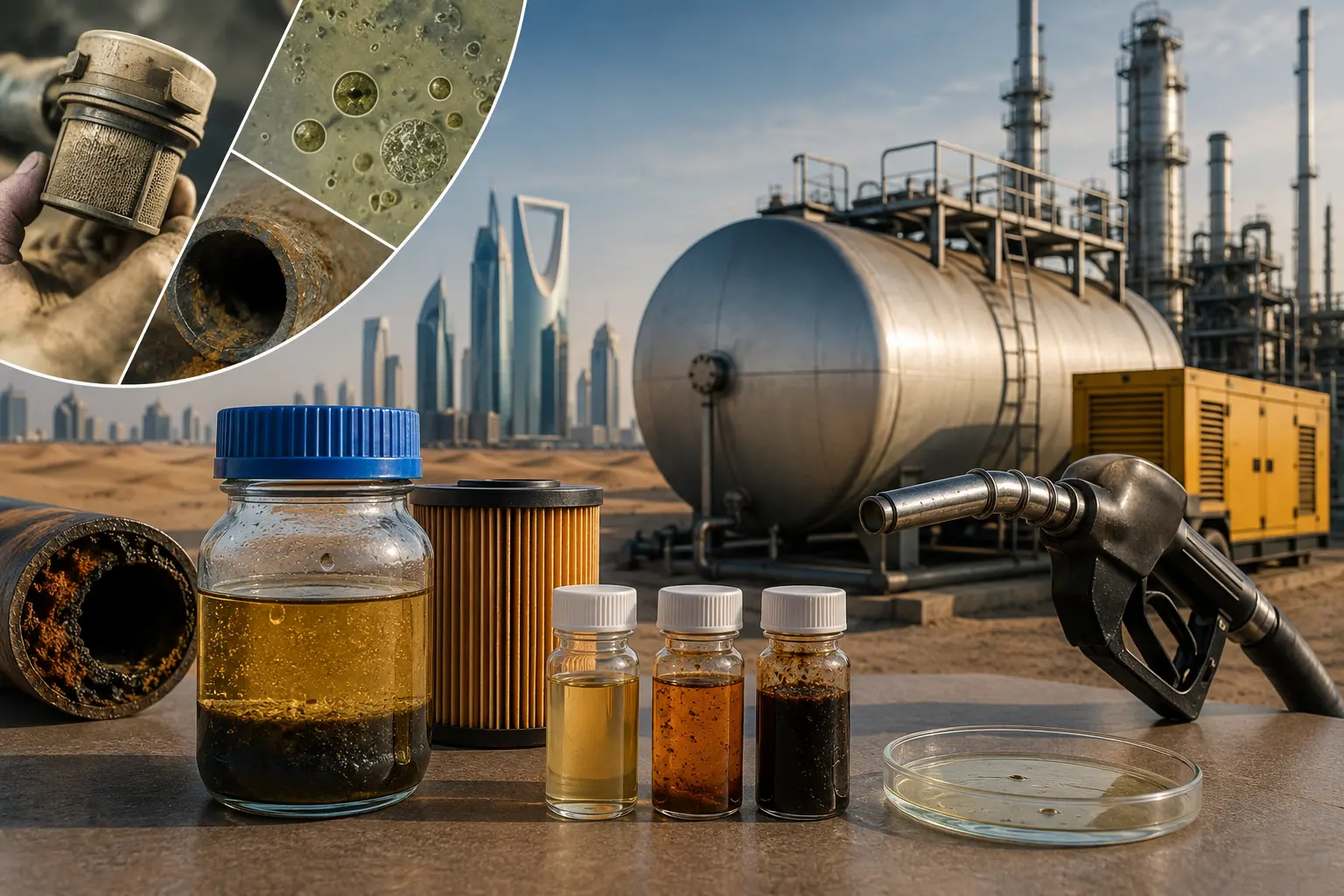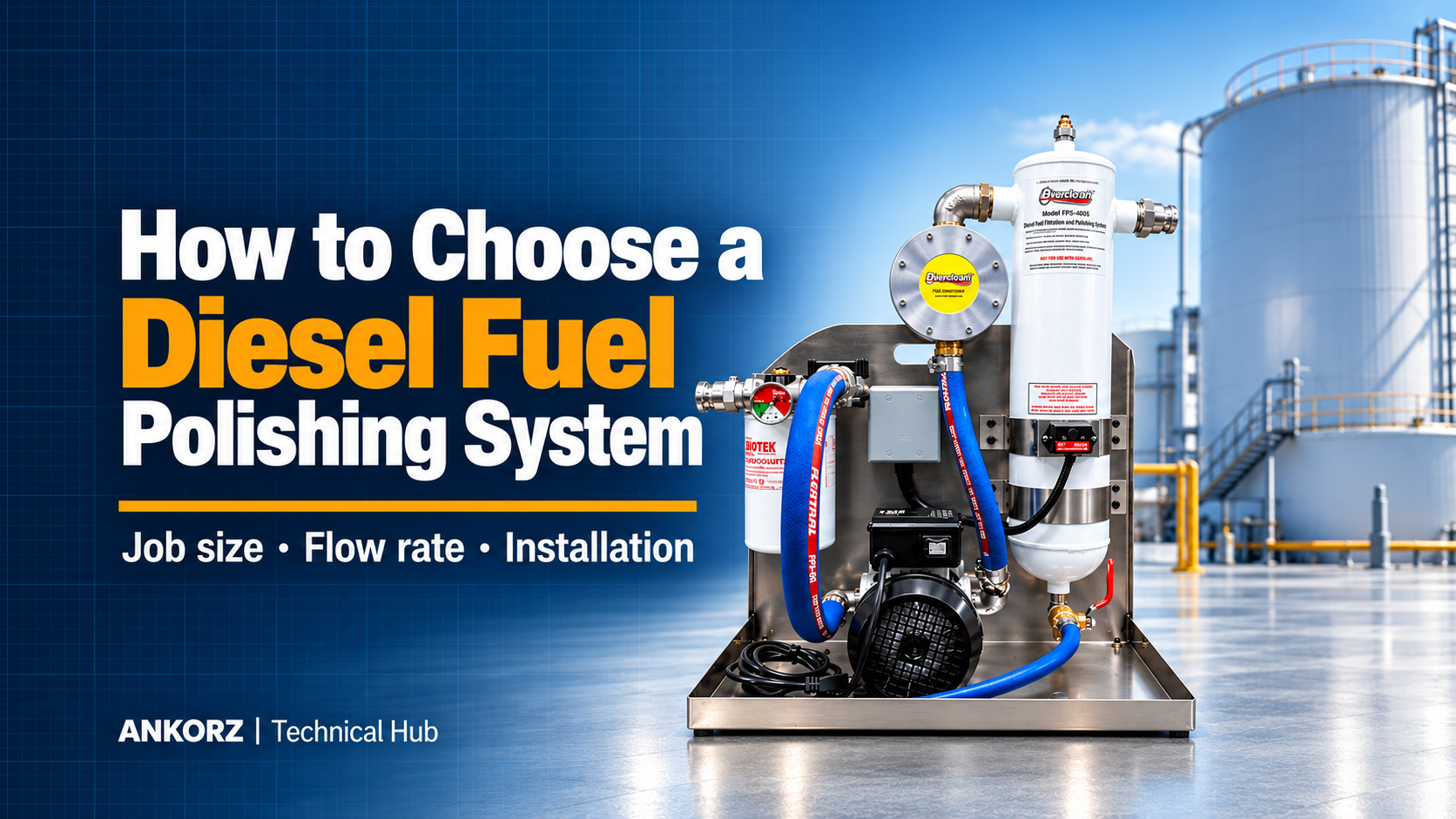
Diesel that sits in a tank for months collects water, sediment and microbial growth. A fuel polishing system recirculates that fuel through a purifier and filters until it is clean again, without pumping the tank out. The idea is simple. The hard part is choosing the right unit for your tank, your site and your power supply. This guide shows how, with tables you can check against the manufacturer’s own data.
Quick pick: which model fits your situation?
| Your situation | Choose | Why |
|---|---|---|
| Generator, boat or truck tank; occasional jobs; you want to carry the unit | FPS-HC15 | 65 lb with a T-handle; 15 GPM intermittent-duty pump; built for intermediate jobs |
| Regular polishing of tanks from 50 to 1,200 gallons; you want a wheeled cart | FPS-400 | Continuous-duty 7 GPM pump on a hand truck; sell-sheet job size 50 to 1,200 gallons |
| Large bulk tanks of 2,000 gallons and above; you need high flow | FPS-30 | 30 GPM continuous-duty pump, over 1,200 GPH, dual 10-micron filters, stainless frame |
| One storage tank you polish again and again; fixed installation | FPS-400S | Stationary system, 7 GPM pump, water/debris alarm, fire-resistant hose |
Step 1. Start with the fuel, not the machine
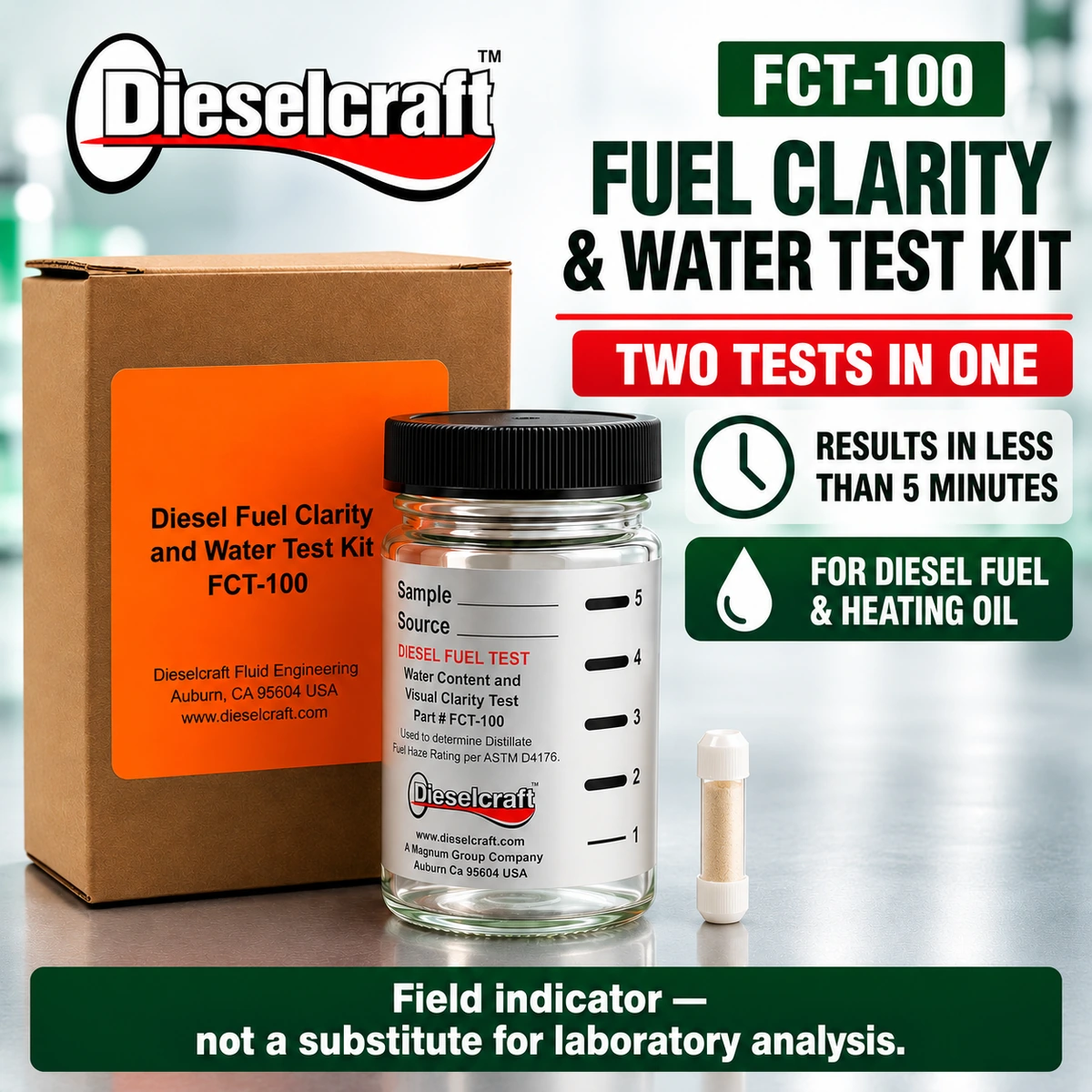
Before you size anything, find out what you are treating. A quick test tells you whether the problem is free water, particles or microbial growth, and gives you a baseline to compare against after the job.
- Test first. See our guide How to Choose a Fuel Test Kit and the Fuel Testing solutions.
- Know the limits. Polishing removes water, sediment and microbial contamination and improves fuel condition. It does not reverse oxidation that has already progressed too far.
- Diesel only. These systems are not for use with gasoline.
Step 2. Size the job: tank volume divided by flow
The simplest sizing rule is to divide the tank volume by the rated flow. The table gives the time for one full pass of the tank at the rated flow of each model (calculated from the sell-sheet flow figures).
| Tank size | FPS-HC15 (450 gal / 30 min) | FPS-400 (420 GPH) | FPS-30 (1,200+ GPH) | FPS-400S (420 GPH) |
|---|---|---|---|---|
| 500 gal (about 1,900 L) | about 33 min | about 1.2 h | about 25 min | about 1.2 h |
| 2,000 gal (about 7,600 L) | about 2.2 h | about 4.8 h | about 1.7 h | about 4.8 h |
| 5,000 gal (about 18,900 L) | about 5.6 h | about 11.9 h | about 4.2 h | about 11.9 h |
Step 3. Compare the four models
Every figure below comes from the Dieselcraft sell sheets. Click a model number to open its product page, or the sheet to read the original.
| Model | Pump | Rated flow | Primary separation | Secondary filtration | Extras | Weight | Datasheet |
|---|---|---|---|---|---|---|---|
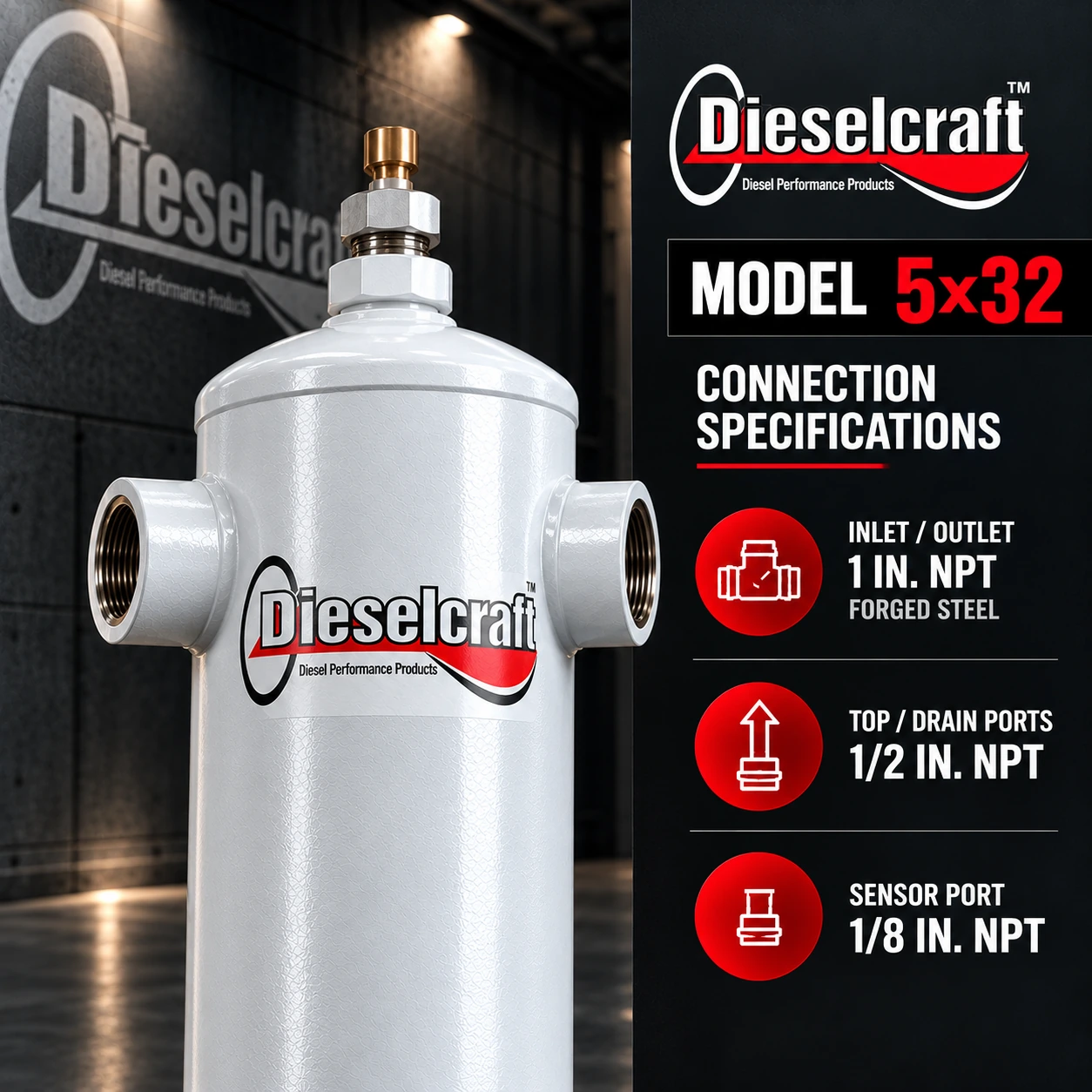
| FPS-HC15 | 15 GPM intermittent-duty, 115 V / 60 Hz | 450 gal per 30 min | 5×16 filterless purifier, over 99% water removal | 10-micron long-series spin-on | T-handle carry, 2 × 12 ft hoses, cam-lock end caps | 65 lb dry | Sell sheet (PDF) |
| FPS-400 | 7 GPM continuous-duty vane pump, 115 V | 420 GPH (subject to distance from source) | 5×24 filterless purifier, over 99% water and solids | 10-micron spin-on with change gauge | Magnetic fuel conditioner, digital flow meter, water/debris alarm, hand-truck cart | 130 lb machine | Sell sheet (PDF) |
| FPS-30 | 30 GPM continuous-duty vane pump, 115 V | Over 1,200 GPH | 8×32 filterless purifier | Dual 10-micron spin-on with change gauges | Magnetic conditioner (Model 200-900), digital flow meter, water-sensor alarm, stainless frame and drip pan, 25 ft cord | 220 lb dry | Sell sheet (PDF) |
| FPS-400S | 7 GPM continuous-duty, 115 V | 420 GPH (subject to distance from source) | 5×24 filterless purifier, over 99% water and large contamination | 10-micron spin-on | Water/debris alarm, magnetic fuel conditioning, digital flow meter, fire-resistant Flehtral GH-16 hose | See sell sheet | Sell sheet (PDF) |
Step 4. Check the installation before you order
| Question | What to check |
|---|---|
| Where is the tank? | Access, hose reach and distance. Longer hose runs reduce flow. |
| Portable, cart or fixed? | Carry (FPS-HC15, 65 lb), wheel (FPS-400, FPS-30) or stationary (FPS-400S). |
| How often will it run? | Occasional jobs suit the intermittent-duty FPS-HC15. Repeated or long jobs call for a continuous-duty pump. |
| What power is on site? | The sell sheets list 115 V. Confirm the voltage and frequency option for your site before ordering. |
| Is fire resistance required? | The FPS-400S ships with a fire-resistant Flehtral GH-16 hose (SAE 100R1AT / EN853, MSHA approved). |
Step 5. How the system cleans the fuel
- Pump. Draws fuel from the tank.
- Filterless purifier. Removes free water and heavy contamination without a filter element. Drain it when the water/debris alarm tells you to.
- 10-micron spin-on filtration. Polishes the fuel; change filters when the gauge shows it.
- Return. Clean fuel goes back to the tank and the cycle repeats until the fuel tests clean.
The larger models also include a magnetic fuel conditioner, which the manufacturer describes as helping to fight bacteria growth.
Nine tips from the field
- Test before and after. The second result is your proof.
- Run until the fuel tests clean, not for a fixed number of hours.
- Drain the purifier when the water/debris alarm indicates.
- Change spin-on filters when the gauge shows restriction.
- Keep hoses as short as the job allows.
- Polish before a long idle period, such as a standby generator that will sit for months.
- Never use these units on gasoline.
- Check voltage and frequency before ordering.
- Keep a log: date, volume, test result and filters changed.
Five mistakes to avoid
- Buying on flow alone. Duty cycle matters as much as GPM.
- Undersizing for a large tank. Above 2,000 gallons, flow decides how many days the job takes.
- Skipping the test. Without it you cannot prove the result.
- Ignoring site power. A 115 V unit is no use on the wrong supply.
- Treating polishing as a cure for old, oxidised fuel. It cleans; it does not reverse oxidation.
Send us a useful selection brief
Share these six details and we will recommend the right system: tank volume; fuel type (diesel only); tank location and access; power available (voltage and frequency); target cleaning time; permanent or portable use. Start from our Fuel Polishing solutions page or contact ANKORZ directly.
Frequently asked questions
Can I use a diesel fuel polishing system on gasoline?
No. All four Dieselcraft polishing systems are for diesel only and are marked not for use with gasoline.
How long does polishing take?
It depends on tank volume, rated flow, hose distance and how contaminated the fuel is. As a starting point divide the tank volume by the rated flow to get the time for one full pass, then repeat passes until a fuel test is clean.
Does a polishing system replace fuel testing?
No. Test first to know what you are treating and test again afterwards to confirm the result. Polishing removes water, sediment and microbial contamination and improves fuel condition, but it does not reverse oxidation that has already progressed too far.
Which model suits a standby generator?
For a generator tank of a few hundred gallons that you service occasionally, the portable FPS-HC15 or the cart-mounted FPS-400 are the usual starting points; for a larger fixed tank that you polish repeatedly, look at the FPS-400S or, above 2,000 gallons, the FPS-30.
Do the units work on Gulf power supplies?
The Dieselcraft sell sheets list 115 V motors. Mains voltage and frequency differ across the GCC, so confirm the available option for your site with ANKORZ before ordering.
Related reading
- How to Choose a Diesel Fuel Purifier
- The Complete Guide to Diesel Fuel Contamination in the GCC
- Do Chemical Fuel Additives Remove Water From Diesel?
- Fuel Purification solutions
Source: Dieselcraft sell sheets for FPS-HC15, FPS-400, FPS-30 and FPS-400S. Times in the sizing table are calculated from the rated flows and are indicative only.